


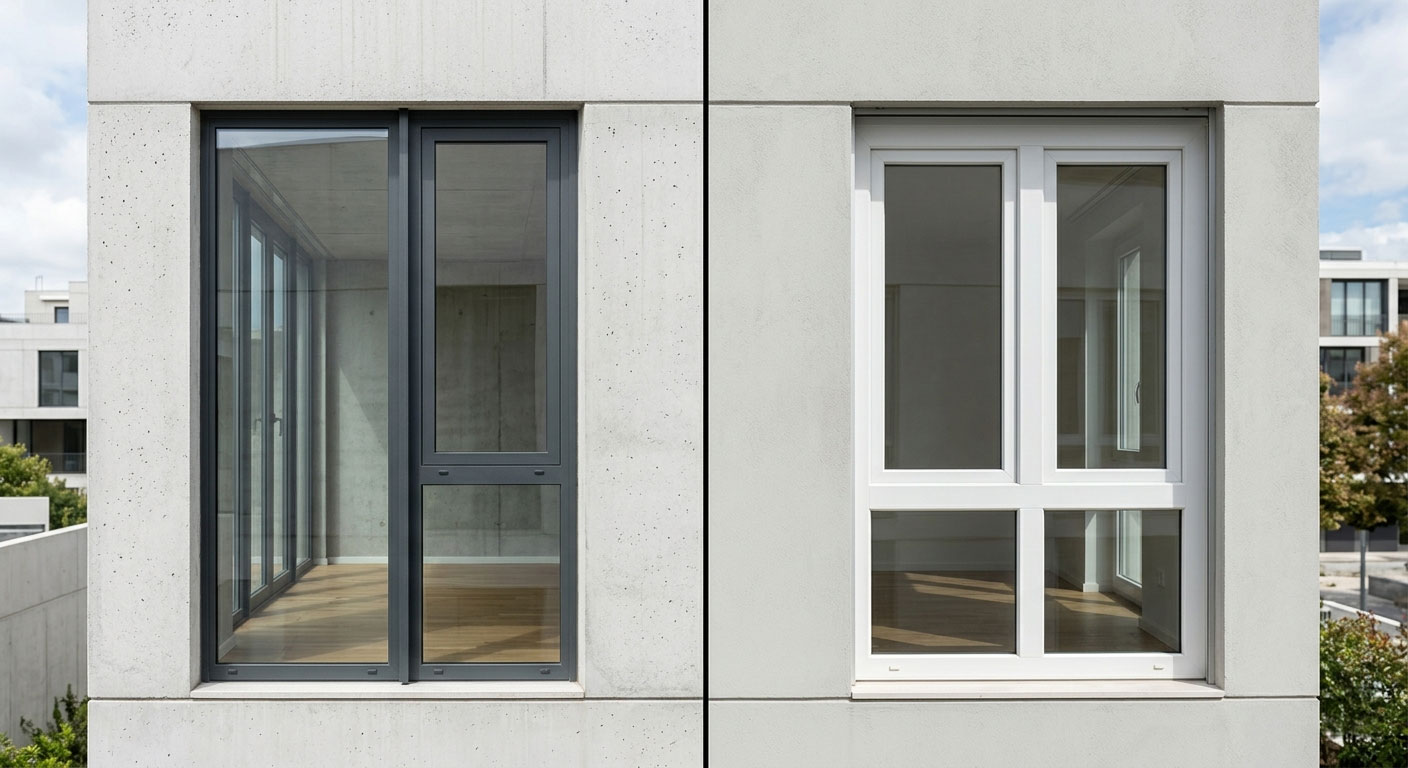
This is one of the most common questions in residential and commercial construction, and it is worth answering properly. Aluminum and vinyl windows are both widely used, both have real advantages, and both have limitations that matter depending on the project. The right choice is not the same for every building.
This article breaks down the comparison across the factors that actually affect a decision: performance, aesthetics, energy efficiency, cost, and long-term value.
Aluminum is a hard, stable metal. It does not warp, swell, or shrink with changes in temperature and humidity. A well-built aluminum window frame holds its shape and its tolerances for decades, which is why it is the standard choice for commercial buildings, high-rise construction, and any project where precision and longevity are expected from the outset.
Vinyl behaves differently. It expands and contracts more significantly with temperature swings, which over time can cause frames to distort slightly and seals to weaken. In moderate climates this is rarely a problem. In places like New York, where winters are cold and summers are hot, it is something to factor in.
Aluminum also handles physical stress better. It is less likely to crack under impact and holds fasteners more securely, which matters in large window units and in buildings exposed to wind.
This is where the difference is most visible. Aluminum profiles can be extruded into very slim sections, which means the frame takes up less of the glass area and the window has a cleaner, more architectural look. For modern facades, large glazed openings, and any project where the design intent involves strong horizontal or vertical lines, aluminum is almost always the better choice.
Vinyl frames tend to be bulkier. The material requires more wall thickness to achieve structural stiffness, and the result is a chunkier profile that reads differently on the facade. In traditional or cottage-style residential buildings this can work well. In contemporary architecture it usually does not.
Aluminum can be powder coated in a wide range of colors, including custom finishes matched to specific architectural palettes. Vinyl comes in a more limited range of factory colors and cannot be repainted easily once installed.
This is the one area where vinyl has a genuine and often cited advantage. Aluminum conducts heat, which means that without a thermal break, heat transfers through the frame from inside to outside (or the reverse in summer). Early aluminum windows had this problem badly, and in cold climates they would condensate and lose significant amounts of heat through the frame.
Modern aluminum windows address this with a thermal break, a section of low-conductivity material built into the frame that interrupts the heat path. With a proper thermal break, aluminum windows perform well in cold climates and meet the energy codes required in New York and other northeastern states.
Vinyl is naturally a poor conductor of heat, which gives it an advantage in energy performance without requiring additional engineering. For budget-sensitive residential projects where energy efficiency is the main concern, this is a real consideration.
That said, the glass specification matters far more than the frame material for overall window energy performance. A high-quality double or triple glazed unit with a good spacer and low-e coating will outperform a cheaper unit regardless of whether the frame is aluminum or vinyl.
Vinyl windows cost less upfront. For a large residential project replacing many windows on a tight budget, the difference can be significant enough to matter.
Aluminum windows cost more to manufacture and install, but they tend to hold up better over time. They do not fade, they do not become brittle, and they do not need to be replaced as quickly. Over a 30 or 40 year building lifespan, the total cost picture can look quite different from the initial price comparison.
There is also the question of property value. In high-end residential markets and commercial real estate, aluminum windows are associated with quality construction. They are what buyers and tenants in those segments expect to see, and a building specified with good aluminum windows tends to reflect that in its valuation.
For commercial projects, the answer is almost always aluminum. The performance requirements, the aesthetic expectations, and the durability demands of commercial construction make it the clear choice.
For residential projects, it depends. If budget is tight and the building style suits it, vinyl is a reasonable option. If the project is high-end, architecturally driven, or in a market where long-term quality matters, aluminum is worth the investment.
In New York specifically, where construction standards are high and buildings are expected to perform in a demanding climate, aluminum windows with a proper thermal break are the specification most architects and developers reach for by default.
Choosing between aluminum and vinyl is easier when you have someone to talk it through with. At Ecosupply, we work with architects, developers, and contractors on residential and commercial projects across New York, helping them find the right window system for the building, the budget, and the climate.
Take a look at our range of aluminum windows or get in touch to discuss your project.
